
Orris
Iris in perfumery.
Working with iris in a perfume means exploring a rare and captivating ingredient, where each note reveals a discreet luxury. Including it in a composition, whether as the absolute star or in a supporting role alongside other ingredients, is a perfumer's privilege.
The iris, often called "blue gold," has fascinated people for centuries. Its petals inspired artists like Van Gogh, while its rhizome was prized at the court of Catherine de Medici, dried and ground into powder for its unique fragrance. This root, a symbol of refinement, offers a complex palette of nuances ranging from powdery sweetness to earthy depth.
Iris and its powdery notes evoke the refinement of royal courts and the "old-fashioned" elegance of rice powders, once composed of rice starch to give the complexion a matte and delicately perfumed finish.
This somewhat rigid representation, rooted in a certain classicism, can nevertheless be revisited to break free from the world of makeup and a certain vision of femininity of yesteryear. Its floral, woody, earthy, and even vegetal facets inspire perfumers to explore versatile territories that are both modern and chic.
Iris varieties in perfumery.
The scent of iris flowers is generally sweet and delicate, with floral, powdery notes, and perhaps a hint of violet. But in perfumery, it's not the flower itself that's used: it's the rhizomes (thickened roots), which, after several years of drying, yield precious extracts such as iris butter , concrete , or absolute.
-
Iris pallida : also known as Florentine iris, this is the most prized variety for its delicate fragrance and powdery, soft, and slightly sweet notes. Grown mainly in Italy, this iris is renowned for producing high-quality iris butter.
-
Iris germanica : more common and robust, it is also used for its root, although it is less fragrant than Iris pallida. However, it offers earthy and woody facets that enrich compositions.
-
Iris florentina : once more widespread, this iris is now less cultivated, but remains appreciated for its fine aromas and its floral and powdery notes.


Iris germanica

Florentine iris
In perfumery, pale-flowered varieties such as Iris pallida or Iris florentina are preferred, not for the scent of their flowers, but for the superior olfactory quality of their rhizomes. namely their concentration of irones. Varieties with more intense or deep colours, on the other hand, are mainly cultivated for ornamental purposes.
Iris butter
The precious essential oil of iris, often called "butter," is obtained by steam distillation of the dried rhizomes of Iris pallida. This slow and costly process releases irones, fragrant molecules responsible for the powdery and woody signature of iris. Depending on the cultivated variety and the drying time—sometimes up to three years—variable levels of alpha irone (with sweet, floral notes reminiscent of violets) and beta irone (more earthy, woody, almost leathery) are observed. Some butters also reveal vegetal or metallic facets, similar to the scent of fresh root or carrot, to the point that perfumers sometimes use carrot seed essential oil to enhance its dimension.
Iris concrete
Another prized extract from the rhizome, iris concrete is obtained through volatile solvent extraction. Its waxy, dense texture retains a rich aroma, though it is more raw than iris butter. It reveals a darker, deeper iris with earthy, slightly leathery undertones. While sometimes used as is in perfumery, concrete primarily serves as a raw material for the production of iris absolute. Less concentrated in irones than iris butter, it nonetheless provides a texture and longevity highly valued in woody, oriental, or fruity accords.
Iris absolute
Iris absolute is obtained by washing the concrete with alcohol, followed by the slow evaporation of the alcohol. This process isolates the finest, most floral part of the iris. More supple and easier to incorporate into a composition, the absolute reveals a powdery, cosmetic facet, while retaining a beautiful woody depth. Its iron content can reach 15 to 20% depending on the quality, making it a prized ingredient in haute parfumerie for its luminous elegance and its ability to structure a fragrance trail with grace and subtlety.

Iris butter

Iris concrete

Iris absolute
The iris in synthetic form
Its high cost and rarity lead perfumers to resort to synthetic alternatives to reproduce the multiple olfactory facets of iris.
Among them, ionones — alpha, beta, methyl, gamma, or dihydro-beta — play an essential role in the construction of so-called "iridescent" accords. These molecules reflect the elegant powder and the woody softness of iris, while subtly evoking the scent of the violet , to which they are chemically related. Some ionones display facets Fruity, green or musky , bringing depth and modernity to the combination:
‣ alpha ionone It brings a woody, floral elegance.
‣ Beta ionone , which is gentler, adds a fruity-violet and velvety effect.
‣ dihydro-beta ionone It develops floral notes that are also woody, earthy, amber, and fruity.
‣ Methyl ionone , a pillar of iris/violet accords, ensures a beautiful powdery, floral and woody hold.
In parallel, Irones , naturally present in iris butter or iris absolute, embody the quintessence of natural iris, with their accents Powdery, floral and earthy , extended by a veil that is sometimes almost metallic. Together, ionones and irones allow the iris to vibrate between classicism and contemporary reinvention.
Materials such as Orris hexanone, Orris Givco®, Vertenex®, Vertofix® or Boisiris® are alternatives which also bring additional nuances, allowing to evoke, in touches, the subtle complexity of the natural iris.
Orris Hexanone : also known as Orivone®, this synthetic molecule reproduces the iridescent and powdery notes of iris with fresh and green nuances reminiscent of the rhizomes.
Orris Givco® : developed by Givaudan, this material is designed to imitate iris absolute and iris butter with woody, earthy and powdery notes with a vintage touch.
Vertenex® : this molecule developed by IFF brings woody and amber notes, often used to strengthen the structure of perfumes and prolong their longevity.
Vertofix® : also developed by IFF and known as Methyl Cedryl Ketone, used for its woody and amber notes with hints of violet, or even slightly leathery.
Boisiris® This synthetic molecule from Givaudan reproduces woody notes with a distinctive touch of violet and iris. The elegance and depth of the woody and earthy facets balance the floral sweetness.
Iris in Superfumista perfumes
In our collection, iris concrete is used in the formulation of three of our creations.
Plum de Velours features an iris concrete enhanced by a range of ionones, languidly infusing into a velvety, rich and gourmand accord of candied plums.
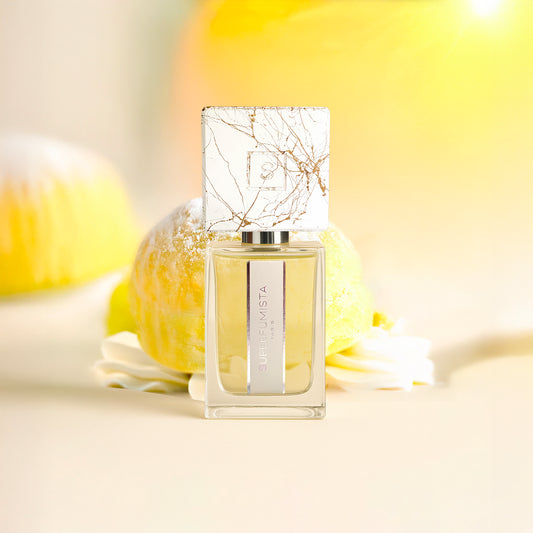
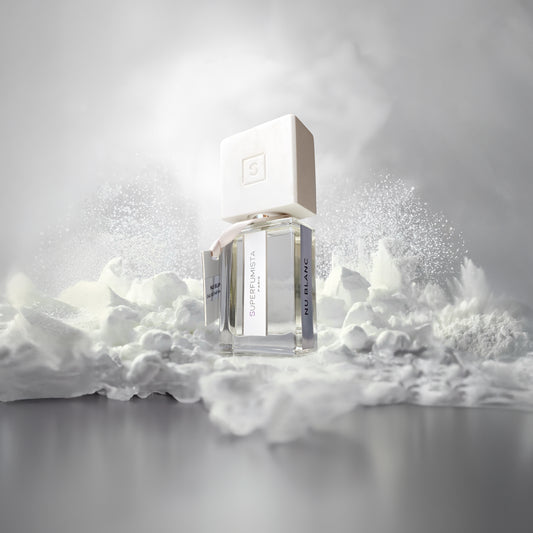
In Nu Blanc , the iris is enhanced by other ingredients with powdery facets such as alpha isomethyl ionone or heliotropin.
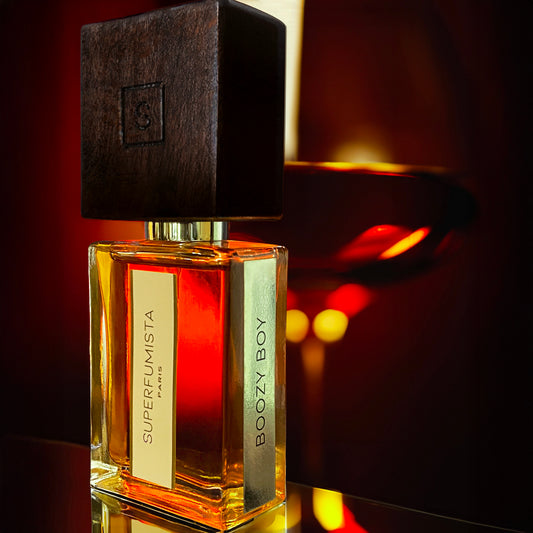
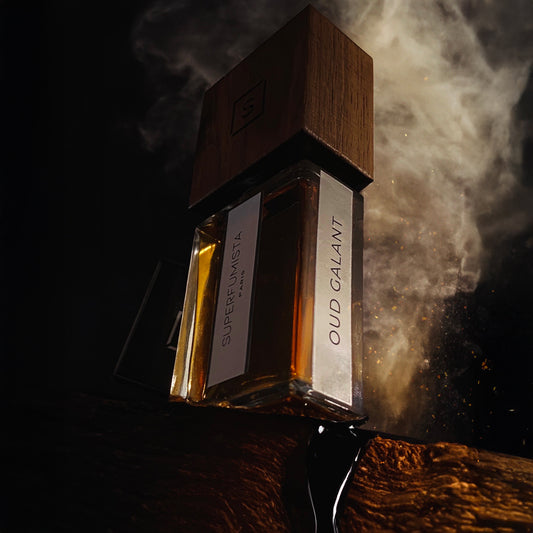
The ingredients that accompany iris butter in Oud Galant possess woody and powdery facets including alpha ionone, beta ionone or the material called Boisiris®.