
Oud and Oud notes
Oud and oud notes in perfumery
You've probably already come across "oud perfumes" and wondered if they contained "real" oud...🤔
If you have ever had the chance to smell "pure" oud oil, do you know what kind it was?
Are you familiar with the different materials used to recreate the very particular scents of oud?
The sweet names of the Oud
Agarwood, Aloe wood, Calambac, agar wood, eagle wood, Oud or Oudh (عود in Arabic), Gaharu candan (अगरवुड in Malaysia), Agaru (ཨ་ག་རུ་), Jinko or jin-koh (沈香 in Japan), Cham Heong* or Chénxiāng » (沉香 in China), Trầm hương or tram Huong (Vietnam), Mai Ketsana or Mai Kritsana (ໄມ້ ເກດ ສະ ໜາ in Thailand)…
These are all names referring to the dark, incredibly fragrant and now well-known resin that Aquilaria trees produce to defend themselves after years of injury and fungal infection by species of fungi belonging to the genera Aspergillus and Penicillium.
Note the beautiful tribute to the Chinese language in the name of Hong Kong Island, which means "the perfumed port » in reference to Aquilaria.
The olfactory profile of oud, particularly intense and rich, is at once woody, animal, green, smoky, leathery, spicy, fruity, honeyed or even floral.
The following facets are generally found in descriptions of the oud:
▸ Animal-phenolic, musky or barn/farm 🐴
▸ leather, smoke, tobacco or incense 💨
▸ resinous, warm, balsamic, amber or honeyed 🍯
▸ green, damp, earthy, bitter, ripe fruit or dried fruit 🌴
In the 2000s, the oud trend in niche perfumery first gained popularity in the Middle East, where it is known and traditionally used in fumigation as incense (bakhoor). The use of this particularly expensive and powerfully scented oil at important occasions or ceremonies is deeply rooted in Indian and Middle Eastern cultures.
Applied pure or mixed in an alcohol-free perfumed composition (attar) with other natural essences like rose, oud seems to allow one to distinguish oneself and to symbolize a social status that confers a form of prestige.
Flirting with musky and amber scents, its unique and complex woody olfactory profile attracted the attention of Western perfumers, leading to its gradual incorporation into niche and then mainstream perfumes during the 2010s. In a market that was almost entirely sanitized, dominated by clean notes (so-called "white" musks), perfumes featuring oud with its leathery and animalic facets were almost a way to assert oneself and embrace a rebellious olfactory edge. The trend worked perfectly, and new releases followed one another in rapid succession.
Beyond the announced and often controversial presence of "real oud" in niche or so-called "mainstream" perfumes, a quick search on parfumo.com It reveals more than 8,000 fragrances including the note "oud" in their composition. A simple search on ChatGPT indicates that more than 1,000 fragrances including the word "oud" have been launched in the last 10 years on a market that sees approximately 2,000 perfume launches per year.
The exotic and luxurious appeal of oud, its almost mystical spiritual aura and the animal charm of its powerful notes make it a sought-after ingredient at the crossroads of Eastern and Western olfactory cultures.

The species, their origins and their olfactory profiles
There are approximately 20 species of Aquilaria, each with slightly different characteristics in terms of aromatic profile.
These different olfactory profiles can of course vary depending on the origin, growing environment and age of the infected trees.
Aquilaria allagocha : deep, woody and slightly animal notes, sometimes with smoky and spicy facets.
India 🇮🇳, Bangladesh 🇧🇩, Iran 🇮🇷, Nepal 🇳🇵, Vietnam 🇻🇳
Aquilaria mallaccensis : warm, resinous, woody nuances, sometimes with notes of dried fruit.
Indonesia 🇮🇩, Malaysia 🇲🇾, Singapore 🇸🇬, Thailand 🇹🇭, Laos 🇱🇦, Vietnam 🇻🇳, Philippines 🇵🇭
Aquilaria crassna : subtle and sweet woody notes accompanied by slightly green and spicy touches.
Cambodia 🇰🇭, Laos 🇱🇦, Thailand 🇹🇭, Vietnam 🇻🇳
Aquilaria beccariana Woody notes with fresh, green undertones
Indonesia 🇮🇩 / Malaysia 🇲🇾: islands of Sumatra and Borneo
Aquilaria microcarpa : woody notes with earthy and herbaceous undertones
Indonesia 🇮🇩, Malaysia 🇲🇾
Aquilaria hirta : softer and less intense woody notes, sometimes with floral or fruity facets.
Malaysia 🇲🇾
Aquilaria parfivolia : woody notes, but with a certain lightness and perhaps fresher or camphoraceous accents.
Thailand 🇹🇭, Indonesia 🇮🇩
Only Aquilaria mallaccensis is classified as an "endangered species" by the IUCN, largely due to overexploitation for its valuable wood. This species is listed in the CITES protection program, while other species remain threatened after years of overexploitation, deforestation, and poaching.

The artisanal production of Oud
Traditional oud production is a skilled craft that combines tradition, expertise, and science. Infection of Aquilaria trees can be natural or carefully induced by growers using specific fungi. To defend itself against this infection or against injury, whether natural (animals, weather) or artificial, the tree produces resin with antifungal and antibacterial properties as a defense mechanism and to prevent the spread of infection within the plant tissue. The oud (resin) thus seeps into the wood around the damaged area, forming a single unit, which explains the name "oud wood" or "agarwood."
This process requires patience, as it often takes years for the resin to fully develop. The artisanal approach respects the tree's natural growth and guarantees the highest quality oud, with each batch having a unique fragrance profile based on the tree's age, the soil, and the climatic conditions.
The infected wood is then harvested by removing the parts of the tree where the resin has accumulated. Oud wood is often cut into small pieces and sometimes ground to facilitate resin extraction or the production of essential oil through steam distillation.
While the IFRA code of practice recommends a maximum dosage of 40%, cost is obviously a factor influencing the amount of pure oud in a composition. Depending on its origin, quality and purity, age, market fluctuations, and the quantities purchased, the price of agarwood can vary between €50 and €300 per gram, or even more for exceptional qualities or specific origins.
Like fine wines, very old "Kinam" or "Kynam" oud is considered one of the most precious and rare forms of oud, highly prized for its unique aromatic qualities and scarcity. This grade of agarwood is often described as having woody, spicy notes, with an almost honeyed or vanilla sweetness, and a complexity rarely found in other types of oud. The rare old Aquilaria trees that produce it are found primarily in Vietnam and China.
Beyond its olfactory properties and preciousness, the beauty and poetry symbolized by this defense mechanism of the Aquilaria tree, transforming an aggression into a precious fragrant substance, undoubtedly contributes to the attraction and covetousness that oud arouses throughout the world.

Alternatives to natural Oud in perfumery
The rarity and price of this precious essence naturally invites the perfume industry and perfumers to recreate and interpret its complex profile by relying on a combination of particularly complementary natural and synthetic materials.
▸ Natural materials for an oud accord:
Woody notes and earthy : cypriol (nagarmotha), Atlas cedarwood, sandalwood, vetiver, patchouli,
Notes of resin and incense frankincense, myrrh, benzoin, Peruvian balsam
Amber, leathery and smoky notes: labdanum, castoreum, civet, rectified birch tar…
Spicy notes cinnamon, cloves, saffron
▸ Synthetic materials for an oud tuning:
Woody, amber and musky notes Norlimbanol®, Kephalis®, Iso E Super®, Ambroxan®, Ambermax®, Amber Xtreme™, Cashmeran®, ketone musk, ambrettolide and various musks…
Spicy notes cinnamyl alcohol, cinnamaldehyde, eugenol, safranal, safralein
Leathery, animal, and smoky notes : Castoreum (repro), Civette (repro), Guaiacol, various phenols and cresols…
🧪 Have you also smelled the different synthetic versions that reproduce agarwood?
Here are some basic suggestions, such as different interpretations of the oud and its many facets (non-exhaustive list):
▸ From Givaudan:
Black Agar Givco® It combines notes of amber, frankincense and balsamic notes, evocative of the smoke of wood burned in bakhoor (incense).
▸ From Firmenich:
Oud Synthetic 10760 E® originally called Oud (Aloeswood) Blend (F) , recalls the natural essence with facets of both vetiver and balsamic.
Oud Samrat® Contains approximately 1% of OUD ASSAFI™, a natural extract from a variety called Aquilaria Malaccensis, registered by Firmenich with CITES for use in perfumery in 2018. It develops woody, amber, spicy, warm and slightly animalic notes.
Oud Maleki® Contains approximately 0.5% OUD ASSAFI™. It develops powerful, woody and animal notes.
Oud Firbest® It also contains naturally derived compounds and develops deep, woody, balsamic, and animalic nuances.
▸ From International Flavors & Fragrances (IFF):
Oud Oliffac® develops sweet notes of tobacco and dried fruit with animal, leather, smoky and mossy facets.
Perfumers rely on these compositions, considered "reconstitutions" or "reconstructions," which enrich the palette of fragrance creators. These materials allow them to simulate the complexity of oud notes while still allowing creativity to flourish, with a "moderate" cost constraint compared to the price of natural oud. In modern perfumery, this constraint remains a major consideration when formulating a fragrance. Indeed, the general public is not always fully aware of this parameter in the olfactory equation, probably because it is rarely highlighted by brands, or because it is evoked in a way that is inversely proportional to the romantic and passionate storytelling that oud inspires.

Oud in Superfumista perfumes
Do we use real oud in our bespoke perfumes and in those in our collection?
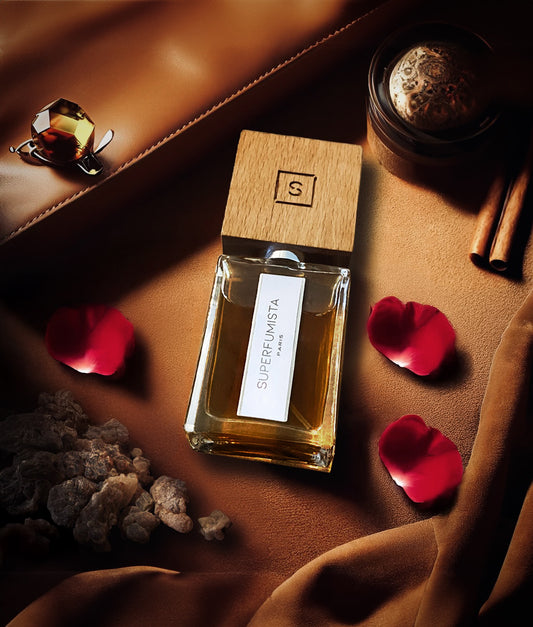
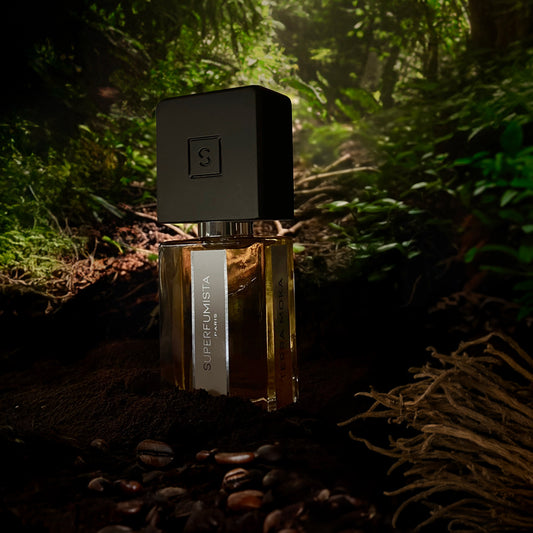
Indeed, we use small quantities of oud essential oil in our creations 😅 such as that from Thailand (Oud Siam) and Cambodia.
Depending on each perfumer's project, their tastes, and the materials selected around agarwood, we can realistically enhance certain facets of oud essential oils. The choice of natural and synthetic materials as explained in detail here This is done according to the desired oud olfactory profile, which can be the star at the center of the perfume or play a more behind-the-scenes role in the composition.
Some bespoke projects also give perfumers the opportunity to work with a unique "oud" note with more or less abstraction, like a non-figurative painting that draws inspiration from the beauty of nature's treasures to translate it with sensitivity and creativity, and for the most daring, to transcend it in an olfactory work.
Oud in our perfumes:
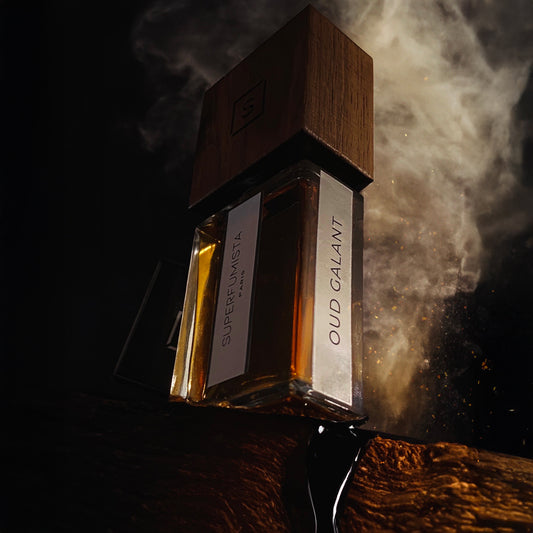
Oud Galant is an eau de parfum with an 18% concentration. This creation contains 1% Oud Siam essential oil.
See the detailed notes